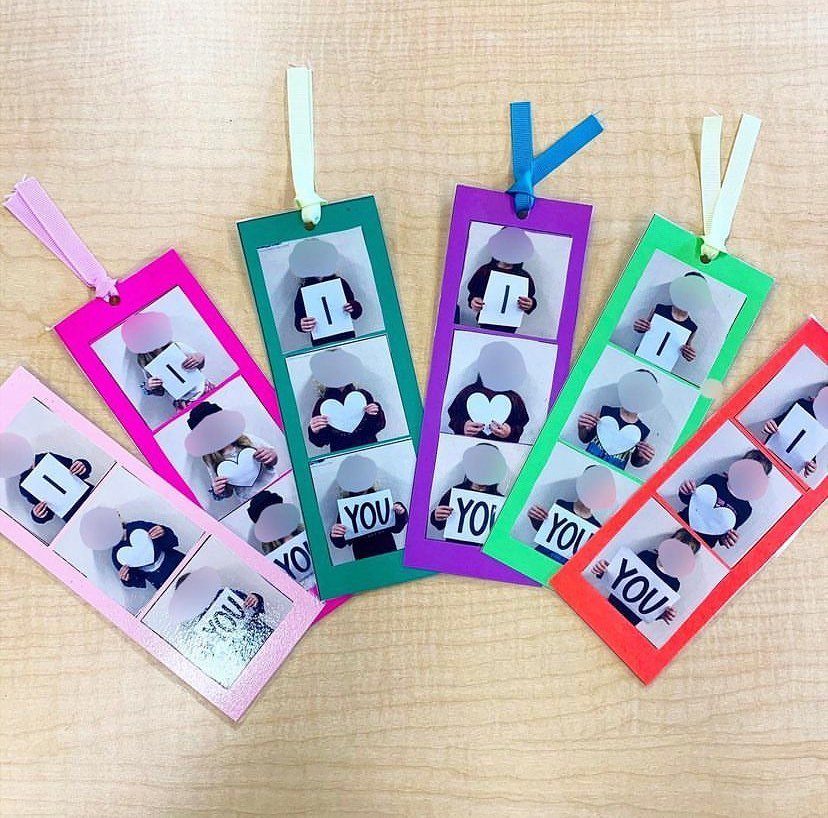
Which of these gifts fits depends on one fact: how much of the work a 5-year-old can finish without an adult taking over.
Some ideas ask only for a thumb and washable paint, while others need an adult to cut puzzle pieces or hearts ahead of time, or to shoot photos before the craft session.
All of them run on cheap supplies like paper, markers, and a pack of assorted tissue that covers a whole classroom. Choose the one where the child does every remaining step, because a gift an adult redoes stops being theirs.
1. Thumbprint Art Cards
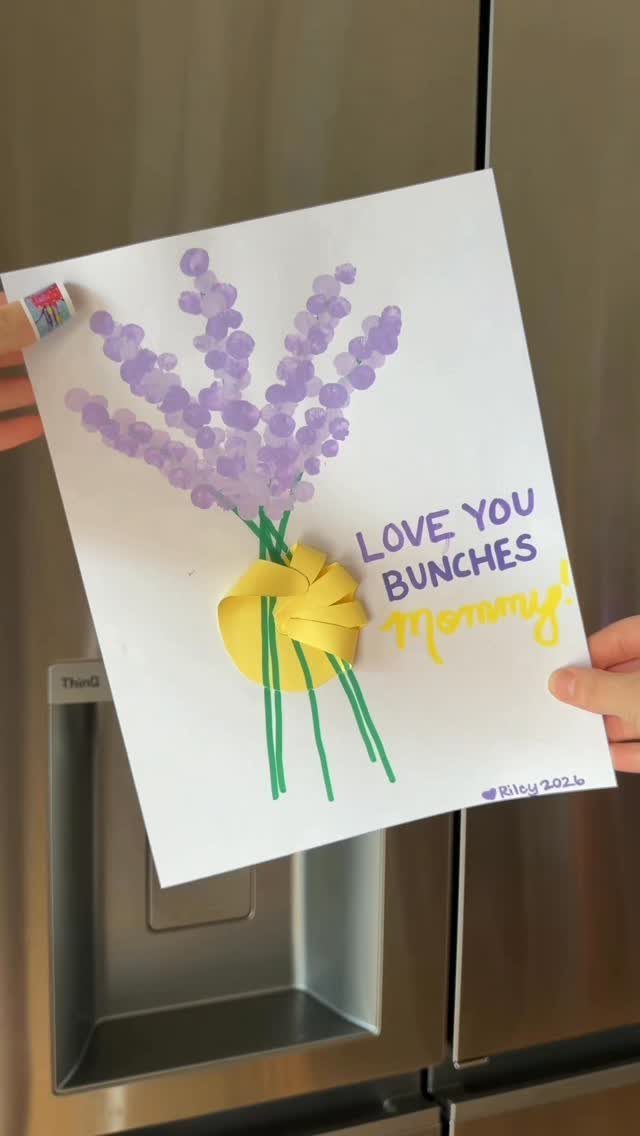
Purple ink and one small thumb are all this card needs. Each print becomes a flower head, and a green marker or a yellow bow drawn under it finishes the job.
A kindergartener can do the stamping alone. Lay down a paper towel pad of washable paint, press, and lift straight up so the print stays clean.
Let the prints dry before anyone adds stems or writes the message. Smeared lettering is the usual casualty, so I’d write the child’s name last, in marker.
2. Photo Bookmarks
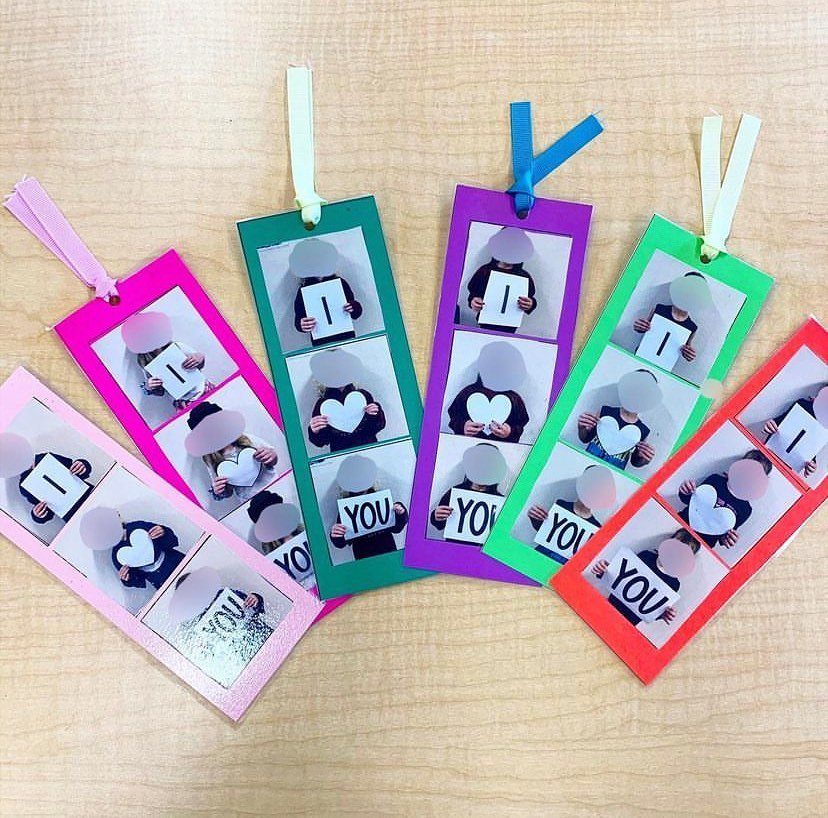
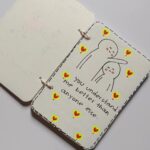
Photos of your child spelling out "I love you" turn a plain bookmark into something a mother will actually keep in a book. Each card holds one word or symbol, so five bookmarks read as a full message.
Shoot the pictures before the craft session, since that is the only step an adult has to handle. The child then picks colors, glues the photo to cardstock, and decorates the edges.
Cardstock holds up far better than copy paper for something that gets slid in and out of pages.
3. Heart Flower Art
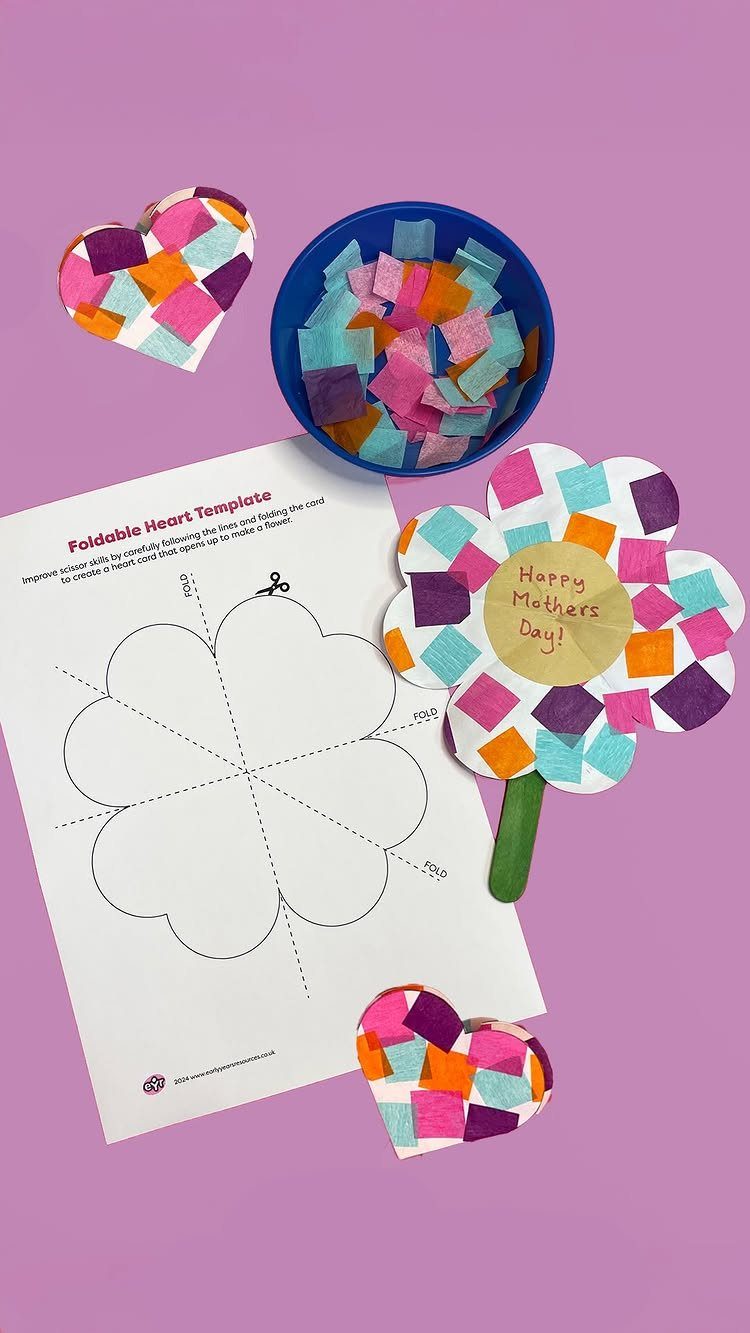
Folding is the clever part here. A foldable heart template gives a kindergartner a clean heart shape without cutting a curve, and the colorful paper squares become petals or fill.
I’d print the template on plain paper first, then let the child glue squares inside the hearts. 2 hearts side by side read as a flower, and a green stem finishes it.
Mount the result on a purple sheet, the way this one does, and add "Happy Mothers Day!" in marker.
4. Helping Hands Oven Mitt
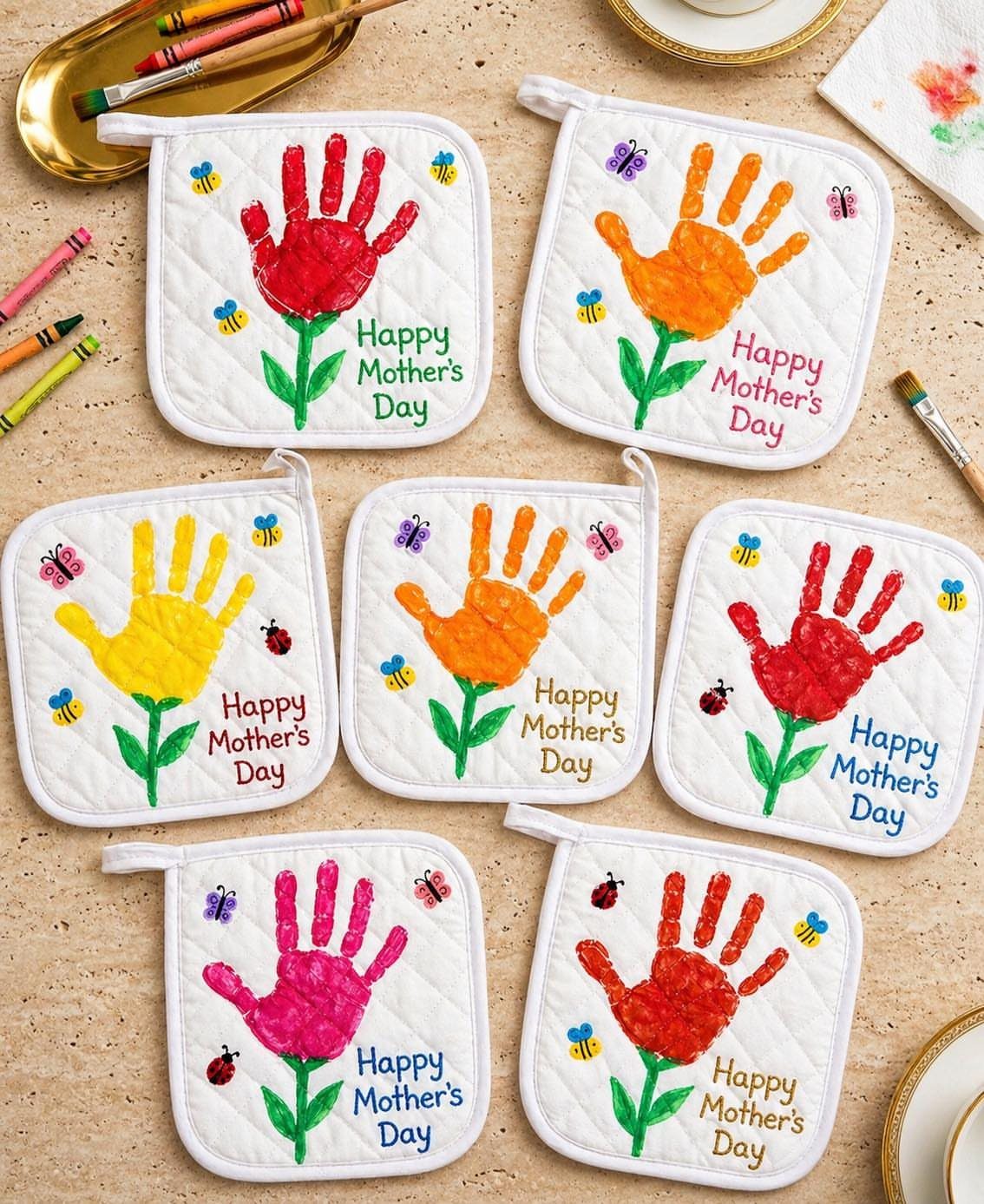
Mothers actually use an oven mitt, which makes this the most practical gift on the list. Handprints become flower blooms, and crayons or paintbrushes add stems and a "Happy Mother’s Day" message.
A plain white quilted mitt is the right base because every color shows on it. Expect to supervise the painting, since wet hands and fabric get messy fast.
I’d do the handprint first, then add details after it dries, so nothing smudges.
5. Tissue Paper Flowers
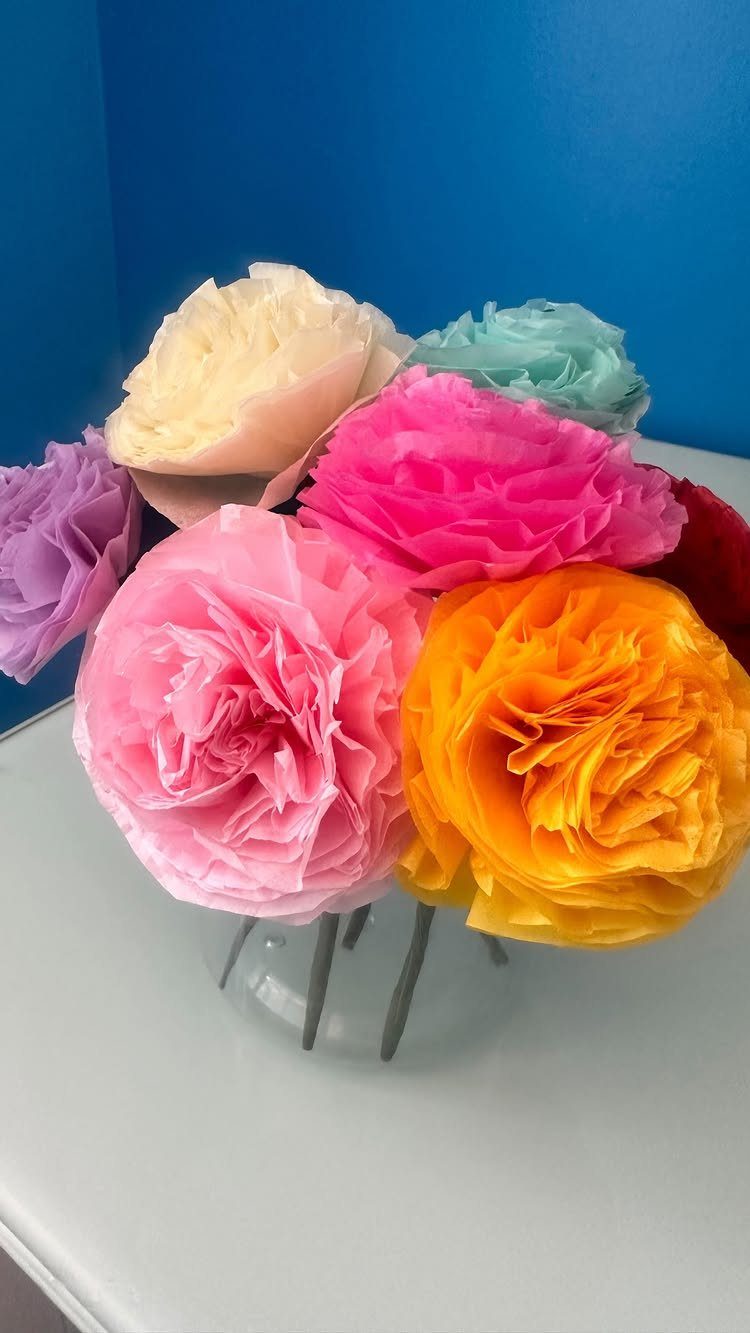
Tissue paper flowers look best crowded together in a clear glass vase, where the mixed colors read like a real bouquet. Nothing here is expensive, and a pack of tissue in assorted colors covers a whole classroom.
Young children can scrunch and twist the paper themselves, which is half the fun. Pipe cleaners or paper-wrapped sticks make easy stems.
For kindergarteners, I’d skip tiny folds and keep the petals big and crumpled; messy blooms still look generous in a vase.
6. Paper Scraps Bouquet
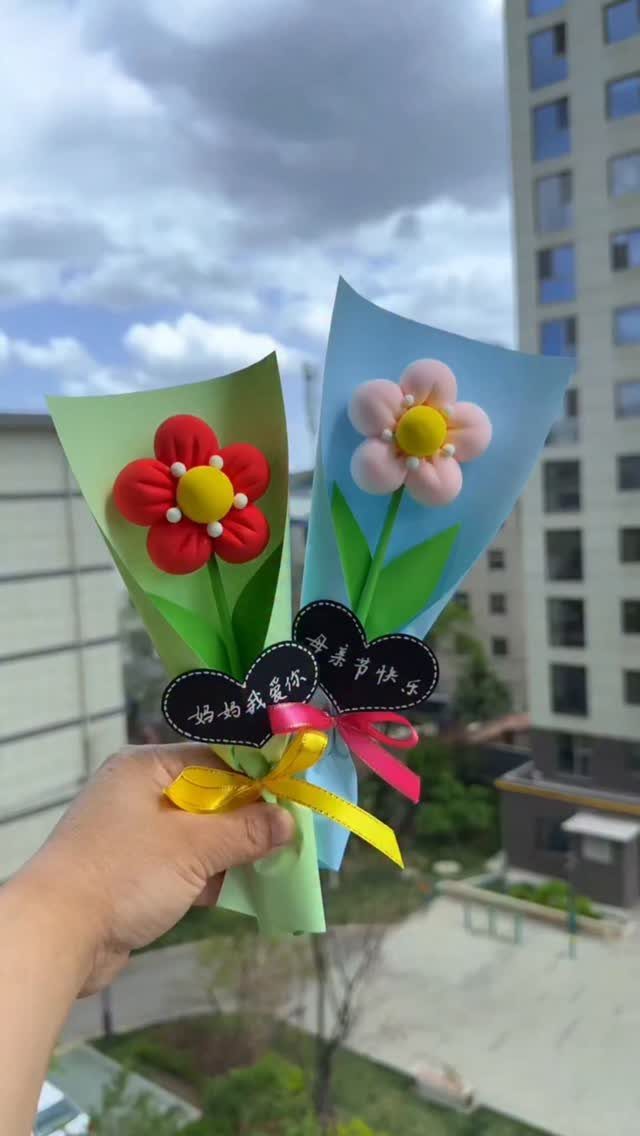
Scraps are the whole idea: leftover red and pink paper from earlier projects becomes blossoms, so this bouquet costs close to nothing. Small tags on the stems give the child a place to write a message.
Kindergarteners can tear or cut rough petal shapes, then glue them layered on a stem. Torn edges look softer than scissor cuts, and they are easier for small hands.
I’d keep the palette to 2 colors, like red and pink, so the bouquet looks planned rather than random.
7. Photo Mason Jars
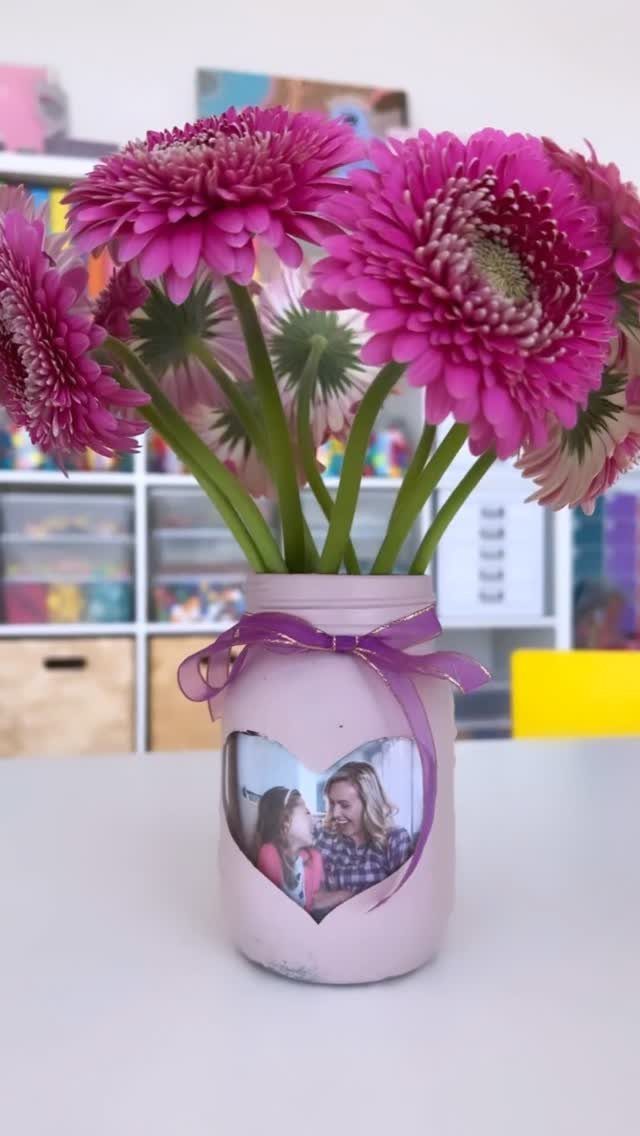
Paint decides how this jar looks. A coat of pink on a plain mason jar, a ribbon tied around the neck, and a heart-shaped photo of mother and child on the front turn a canning jar into a vase.
Cut the heart ahead of time so the child only has to glue it on.
Let the paint dry fully before the photo goes on. Then fill the jar with a few bright daisies, and it is ready to hand over.
8. Love You to Pieces Card
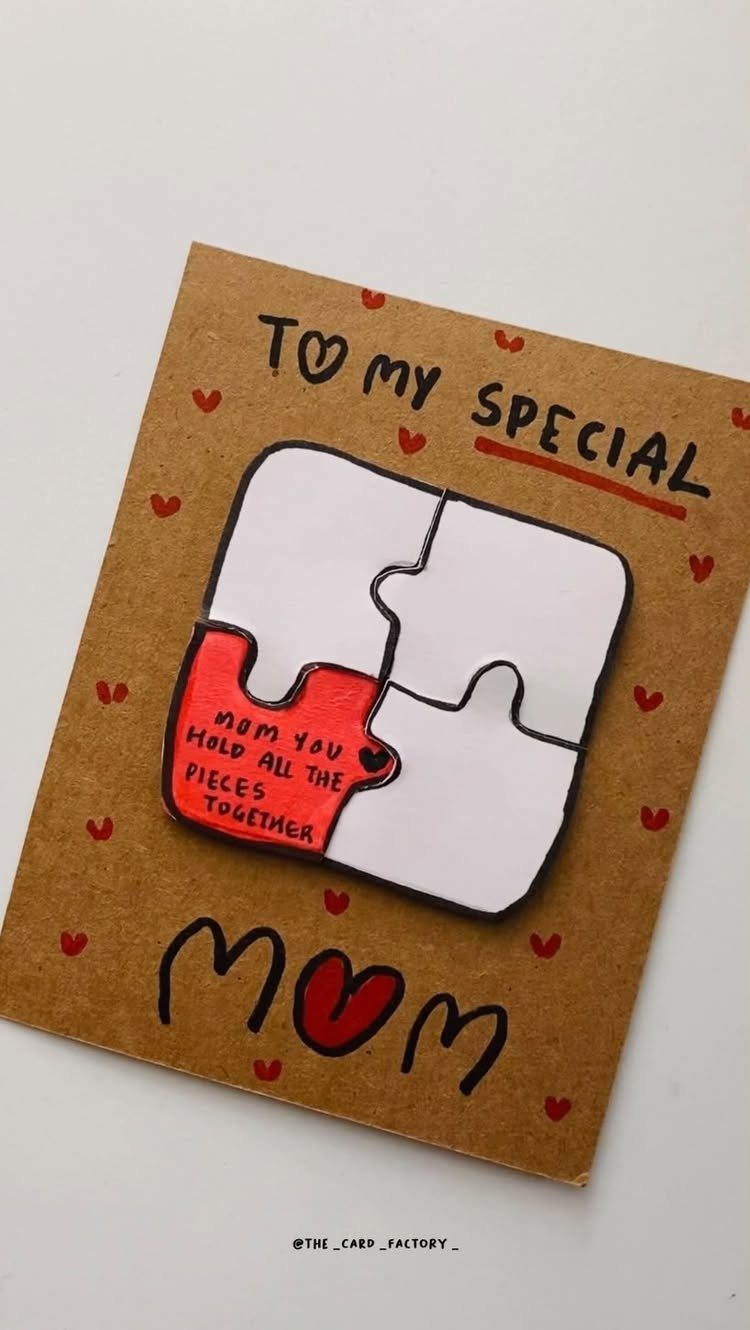
Puzzle pieces carry the whole message on this card: "Mom, you hold all the pieces together." Brown paper makes a sturdy base, and red hearts on the pieces keep it warm.
Adults can cut the puzzle shapes ahead of time, which leaves the kindergartener to glue them down, add hearts, and write in "To my special Mom." Large pieces are easier for small fingers than tiny ones.
I’d keep the wording short, since the pun does the work. Leave the name for the final step, and use a marker once the glue has fully dried so it doesn’t smear.
Tips for Classroom Gifts
Label a gift "adult appreciation" instead of "Mom" and the child with a grandmother, an aunt, a foster parent, or a dad raising them alone is covered without a single awkward conversation.
Print the same line on the cards so nobody has to guess.
Let children make more than one gift if they want to. A child who has two or three important adults can give each of them something, and the extra pieces cost little.
Low-cost supplies stretch furthest across a full room: paper, markers, tiles, laminating sheets, and shrink plastic all make affordable keepsakes.
Laminating and shrink plastic make a piece last, so they are worth the extra step for the gift you expect to be kept.
Importance of Personalization
A gift made for one particular person says more than a pretty one made for anyone.
A child who picks the colors, chooses the words, or decides who the gift is for is telling that adult how they feel, even if the spelling is rough.
Ask the child a question or two before the craft starts: what does she like to do, what is her favorite color, what does she say all the time? Write down the answers and let the child use them.
Keep your own edits light. A crooked letter is part of what makes the gift theirs.
Crafting with Kids
Pick a craft where the child can finish every step without you holding the project. If an adult has to redo the work, the gift stops being theirs, and the meaning goes with it.
Test the steps yourself first. Count how many separate actions the craft needs, and trim anything a 5-year-old would need help with.
Set out materials in small portions ahead of time so the session stays calm. Then step back, and let the child decide where things go.
Frequently Asked Questions
What are easy Mother’s Day gifts students can make at school?
Thumbprint flower cards and torn-paper bouquets are two of the easiest. For the cards, a kindergartener presses a thumb into washable paint to make flower heads, then adds stems and a message in marker.
For the bouquet, children tear leftover red and pink paper into rough petals and glue them in layers on a stem, which costs close to nothing.
Can kindergarteners make these gifts on their own?
Mostly yes, if the craft has steps a 5-year-old can finish alone, with no adult steadying the project.
Prep is where grown-ups earn their keep: cut the puzzle pieces and hearts ahead of time, and the kids only have to glue, stamp, and color.
If you’d have to redo the child’s work, the craft is too hard and the gift loses its meaning.
What supplies are best for classroom Mother’s Day crafts?
Paper, markers, tiles, laminating sheets, and shrink plastic stretch furthest across a full room.
All of them make affordable keepsakes. Both add a drying or baking step, but a laminated or shrunk piece survives a backpack and a kitchen drawer, so I save them for the one gift meant to be kept.